Tuesday, January 30, 2007

Whose World Social Forum? Final Reflections from the 7th WSF in Nairobi, Kenya.

By Colin Rajah

So its been 4 days since the 7th edition of the World Social Forum (WSF) concluded in Nairobi. But some things still remain fresh on many of the minds of those in our US grassroots delegation, as well as on the minds of many of the local Nairobians, I’m sure.

Since even before the opening of this year’s WSF, there have been objections from locals (primarily slum residents) about the Ksh 500 (about US$7.50) registration and entry fee. While US$7.50 might not seem much to us, it is roughly equivalent to a week’s wages for the average slum dweller, or almost US$600 to the average person in the US – not the most affordable when you consider it doesn’t cover food or housing.

As such, slum residents (many of whom we had met and become fast friends with in Korogocho during our site visits) staged daily protests at the main front gates, prompting WSF organizers to re-route participants to other gates and send in security guards to disburse the protestors. This naturally, drew heavy criticisms from all the WSF participants – its something you’d expect at the WTO or World Economic Forum meetings, not at a forum that espouses anti-globalization and civil society!

By Monday (the 3rd day) evening, WSF organizers came to agreement with slum organizers to allow them free entry. Wangui Mbatia, a young slum organizer responded by saying, “We have been congregating on the roadside for 2 days explaining to the officials that we cannot afford the fees. They went to [the slums] and saw the worst part of our poverty. Now we want to come here for the Forum to see the best part of us.”

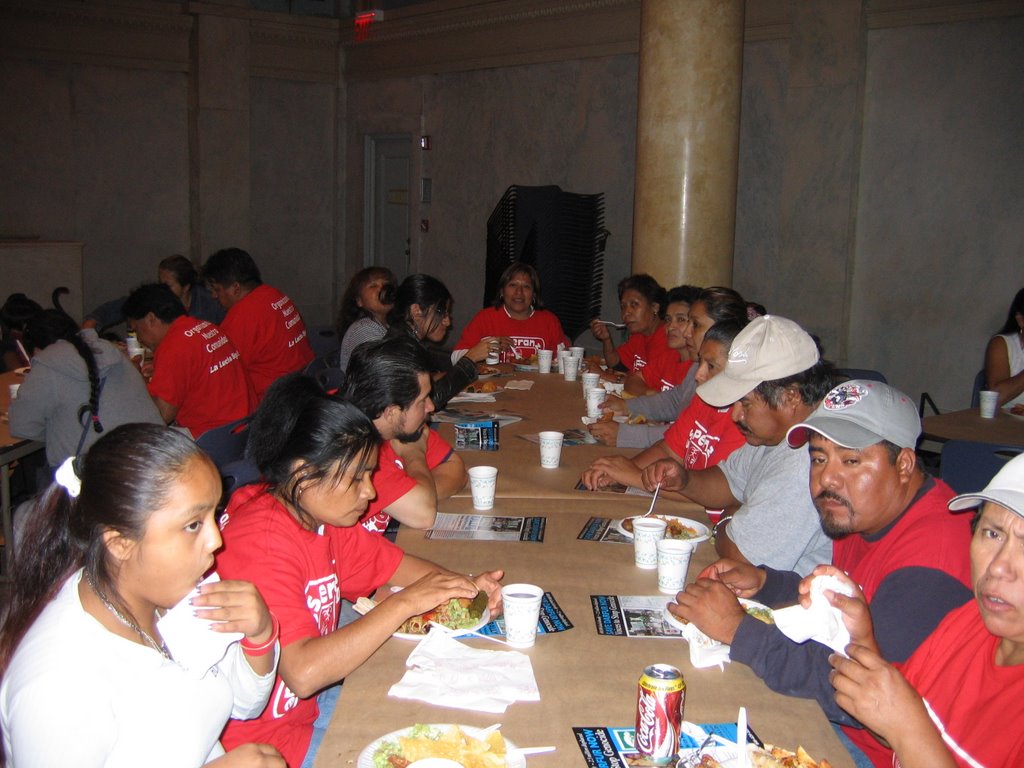
But it did not end there. Earlier on, many of us had noticed that almost all of the food suppliers (many paying sky-high fees) were assigned to a “food court” located far outside the gates without any clear signage and very few patrons. The only eatery inside the gates (and along the most prominent walkway at the WSF) called the Windsor Café, looked like a French bistro with waiters, white-attired chefs, a selection of international cuisine, and prices for entrees averaging around US$5. We later learned that the Windsor Café was an extension from a golf resort, owned by John Michuki, Kenya’s Internal Security Minister, infamously known as “Kimeendero” (the “Crusher”) for his role during British colonial times and his shutdown of one of Kenya’s national newspapers for its criticism of the government.

Once again, the slum dwellers and youth in particular, challenged this horrible irony by rushing and peacefully yet forcibly “reclaiming” Windsor Café on Wednesday! For those of us privileged enough to witness it, it was an incredibly inspiring sight – hundreds of youth from the slums surrounding the Café, advancing towards the grills, claiming the food, and quickly feeding their hungry selves while the chefs and wait-staff standing back perhaps in silent agreement.

These extraordinary events punctuated this year’s WSF like a sledge-hammer and I would be remiss if I did not report them. In fact, it points to the cross-roads the WSF faces. It has come under greater scrutiny that while it has been effective at providing a space for international debate, it lacked sharper political direction and tended to be insular. There is general consensus that the WSF needs broader participation from poorer countries and grassroots communities in general and will prove ultimately ineffective if it fails to do so quickly. Since no forum is planned in 2008 (an international week of actions has be set instead) and 2009 still unsure, there is little doubt that we are all keen to see a resolution soon.

Linda from the Korogocho slums summed it up well when we chatted and prepared to say good-bye on the final day, “You know, we fight, and we struggle, but sometimes its too tough. Just too tough. The government is against us, we are stigmatized by the media, the public thinks we’re criminals or just out to take advantage of the system. No one bothers about our rights, even the NGOs who are supposed to be helping us. We get so tired sometimes. But we know we have to keep fighting, keep struggling.” Hmmm, sounds just like the immigrant rights movement, huh?

(Special thanks to TerraViva for much of the information used in this article.)

Thursday, January 25, 2007

Disturbing Similarities

By Colin Rajah
Reporting from the WSF, Nairobi

Many apologies to those of you who had been waiting anxiously for my next installment of news from Nairobi – yes both of you. The bout with extreme food poisoning I encountered on Tuesday that left me writhing in pain and unable to even stand, the power-outage last night, and the hectic 16-hour days of looking for workshops, walking to workshops, workshops themselves, figuring out where to meet, meetings themselves and the obligatory marches and rallies at the World Social Forum (WSF) all kind of put a slight delay in this issue.

All pars for the course in the typical WSF experience. Being that this is its first visit to the African continent, there were some new expectations, hopes and desires though. But like every WSF, you’re never sure what will happen, who you’ll meet, how things will shake out, until it actually happens.

So while we had some expectations, hopes and desires about making more connections with migrant rights issues here in Africa, it appears we’ve done that primarily through enhancing our understanding of the European Union (EU), the neo-colonialism of North Africa, and the “NGO-tization” of any semblance of movement building on the continent. Even the WSF has stark evidence of these, but more on that in next week’s report. For now, here’s a synopsis of some very interesting and disturbing migrant rights analyses:

As what is the norm in just about every region in the world, the primary causes of migration here seem to be neoliberal trade (where more and more foreign companies displace farmers and small businesses, and significant increases in costs of living occur due to privatization) as well as war and militarism that is very often sanctioned, financed and even directly carried out (as in the case of Somalia) by the U.S. government and closely followed by various European governments.

And just like how the migration track in Central America crosses through Mexico which then becomes a receiving, transit, and sending country, migration through Africa crosses various North, East and West African regions including Libya, Morocco and Senegal.

The disturbing part about these similarities are that in the past 5 years or so, the EU and its member states in Western Europe, have aggressively engaged with these African states in bi-lateral trade agreements which enable easier movement of capital and goods, but further limits movement of people except those with certain “required skill sets.” Hello, NAFTA?

On top of that, these so called “cooperative agreements” include enormous provisions where the European partners (Italy for Libya, Spain for Morocco, Senegal for France and so on with the post-colonial relationships) provide funding for “development projects” on the condition that the their African partners police their borders and conduct EU immigration policy enforcement for them.

First, the “development projects” often entail purchasing development tools from their European donor countries and companies, and then implementing the projects via European NGOs and their agents. Moreover, the locals often loose their lands (which have become unaffordable to maintain) to these development companies in the process.

But the most disturbing part of these “cooperative agreements” came from a series of EU meetings since 1999, which concluded that Africa needed to deal with Europe’s “illegal immigration problem!” The 2002 Seville EU statement states that any bilateral agreement can only be recognized if the African partners make measurable efforts to curtail undocumented migration. So now, the development funding also goes to establishing “processing centers” (i.e. temporary detention camps) to select the desired migrant for Europe, purchasing and using enforcement tools such as patrol boats, surveillance equipment and arms, etc.

The results are as devastating as the humanitarian crisis at the Sonora desert. Since 2005, over 45,000 migrants have attempted to cross from Morocco to Spain even as immigration policing and repression increased. Of those, at least 3,000 have been found dead in the seas between these countries, forced to take greater risks since EU coast guards now patrol the African seas. Furthermore, the abuse and human rights violations reported in the “processing centers” are comparable to the horrifying torture at Guantanamo. Effectively, European borders are no longer in Europe but in Africa now.

And what about walls? Yes, they are there too. The Spanish colonies in North Morocco now have almost 200 miles of walls, and the resemblance to the ones on the U.S.-Mexico border is no coincidence. The agency that was contracted to erect it was sent to the U.S. to study our border walls there!

The need to deepen the understanding of these atrocities and further engage our new-found African and European allies in these struggles, cannot be over-stated. They have stated more than once this week, that Europe’s neo-colonization of African has progressed steadily and many African leaders now work for European interests than their own peoples. And the only way to counter that for migrant rights would be stronger, unified inter-community movements between our regions.

And the seeds of that have been planted this week here in Nairobi. No, I don’t mean the tree-planting farce the WSF has conducted as part of its closing show. I mean the real beginnings of solidarity among migrant communities and grassroots organizers. Indeed, another world is only possible when the people build upon our own similarities, rather than be victimized by the disturbing similarities imposed by our governments.

Sunday, January 21, 2007

Africa: Land, Displacement and Human Rights

from Nairobi, Kenya
by Colin Rajah

Yesterday, the World Social Forum (WSF) arrived on the African continent and Nairobi, Kenya for the first time. Shaking the Western media image of a basket case of a continent, is a challenge. Inevitably, the question about the AIDS epidemic has arose in our delegation more than once. Pharmaceutical companies have waged an extremely successful and profitable campaign to ensure that we get our “shots”.

That’s a vicious self-fulfilling prophecy cycle: if the media says it enough, people start to believe and talk about it, and the media reports that. And so the WSF has challenges even before it began.

But for the 60+ of us who are a part of the Grassroots Global Justice (GGJ) delegation from the U.S., being primarily people of color, working class, African-American and immigrants, we already understand needing to contend with oppression reinforced by public miseducation.

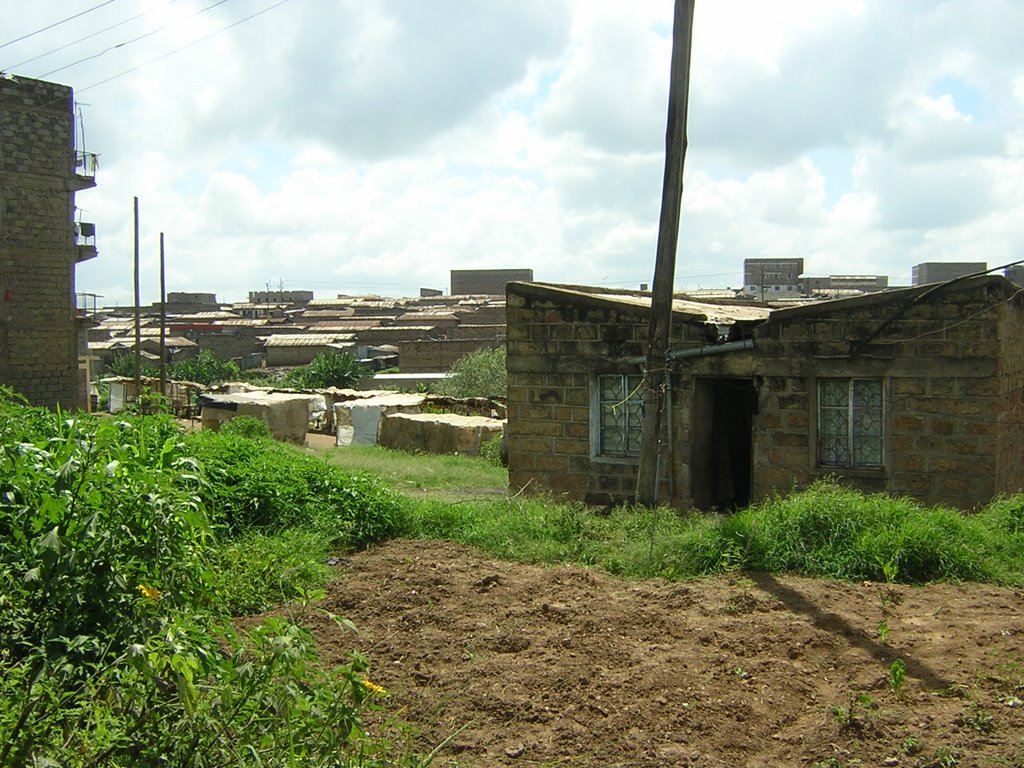
So when we began our WSF 2007 with a couple of site visits to the Korogocho slums and the Rukubi village, it was already recognizable. In spite of being the largest collection of slums – or more accurately, “people’s settlements” – in Nairobi, Korogocho has a growing network of community organizations that not only contend with the extreme poverty, but with public stigma of them as criminals (does having to turn to sex work or petty theft just to be able to put food on the table make one a criminal?)

It boasts a community-run radio station, a number of cultural performance groups, a youth sports association that also doubles as a handicraft collective etc. And at the same time, they have to contend with the attempts by private companies who are attempting to “land grab” pieces of their land to gentrify. When land grabbing has happened, overnight communities have been displaced and forced into even more poverty.

In another stark example, John Ayila from the Friends of Yala Swamp explained to us how their rural community that includes a lake has been leased to Oklahoma-based Dominion Farms to harvest products that are sold to the U.S. In spite of Yala Swamp’s appeals and pleas to the government and international organizations like Greenpeace etc., Dominion Farms continues to take over the land they have lived in for generations. For our part, we pledged to launch a solidarity campaign against Dominion Farms upon our return to the U.S.

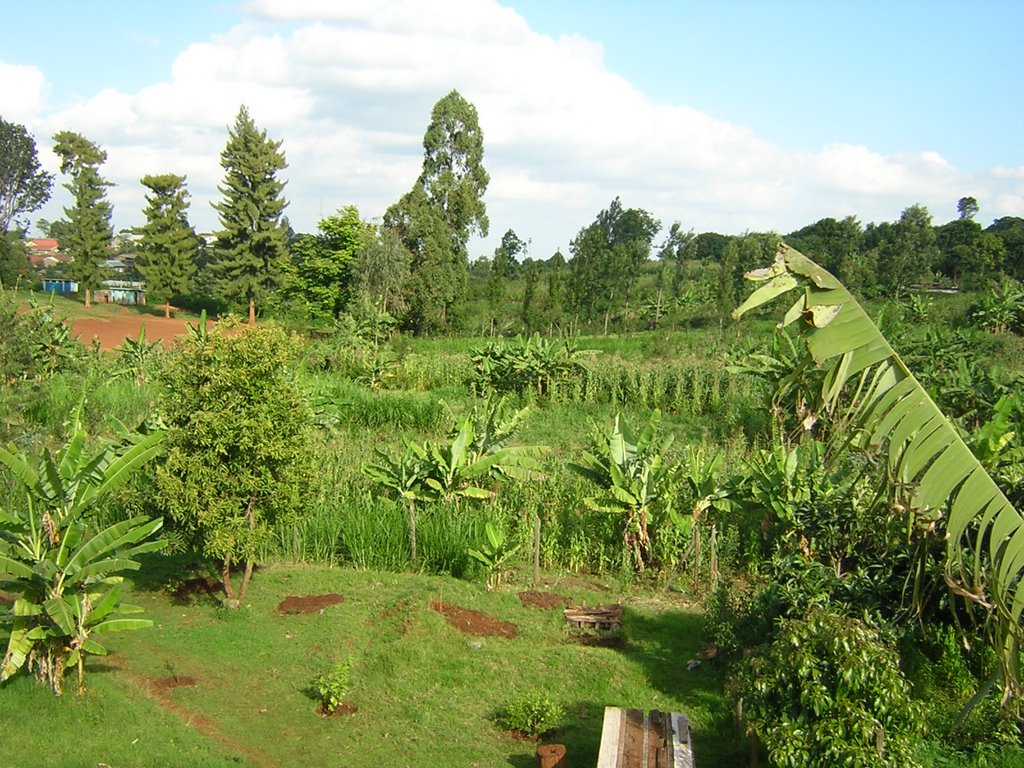
The village of Rukubi on the other hand, showed how the “Daughters of Mumbi” develop sustainable agriculture projects, build a multipurpose hall, and setup a community clinic.

Africa isn’t a basket case at all. She is still fighting racism and colonialism often times in the form of corporate land grabbing and gentrification. But in spite of the enormity of her challenges, she continues to smile and welcome us --“Karibu!” And we are privileged to enjoy her hospitality -- “Assante.”

Wednesday, November 29, 2006

Monday, October 16, 2006

NNIRR Report from the Border Social Forum

NNIRR Report from the Border Social Forum (October 13-15, 2006)
by Arnoldo Garcia & Colin Rajah
transcribed by Diana Pei Wu

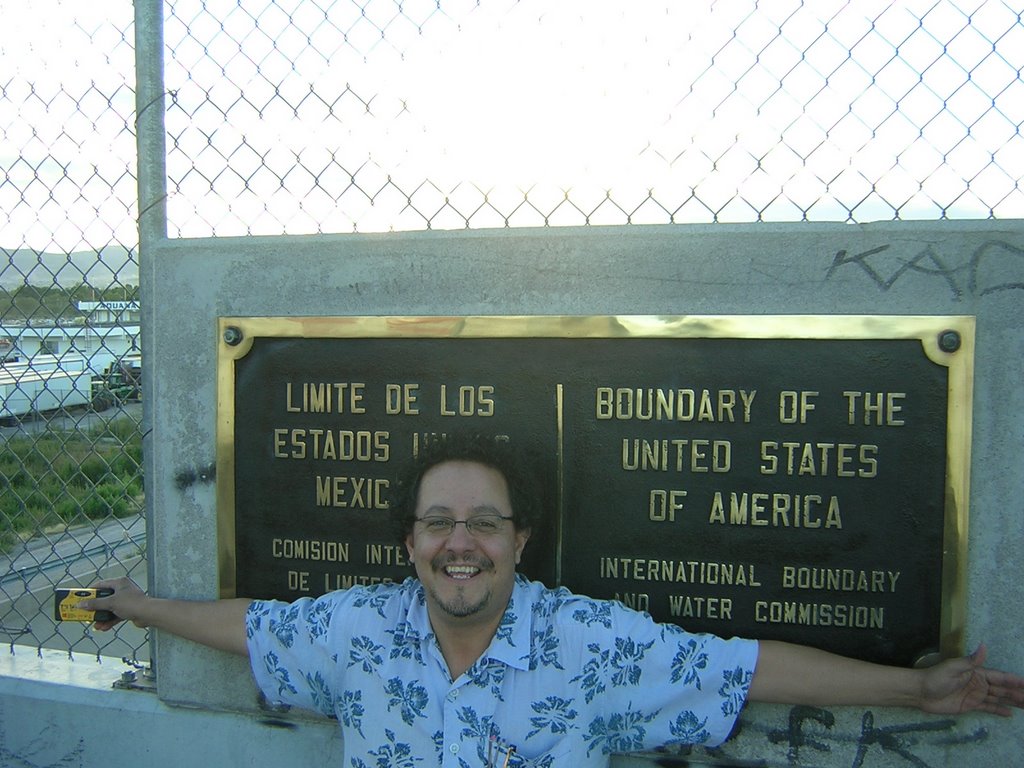
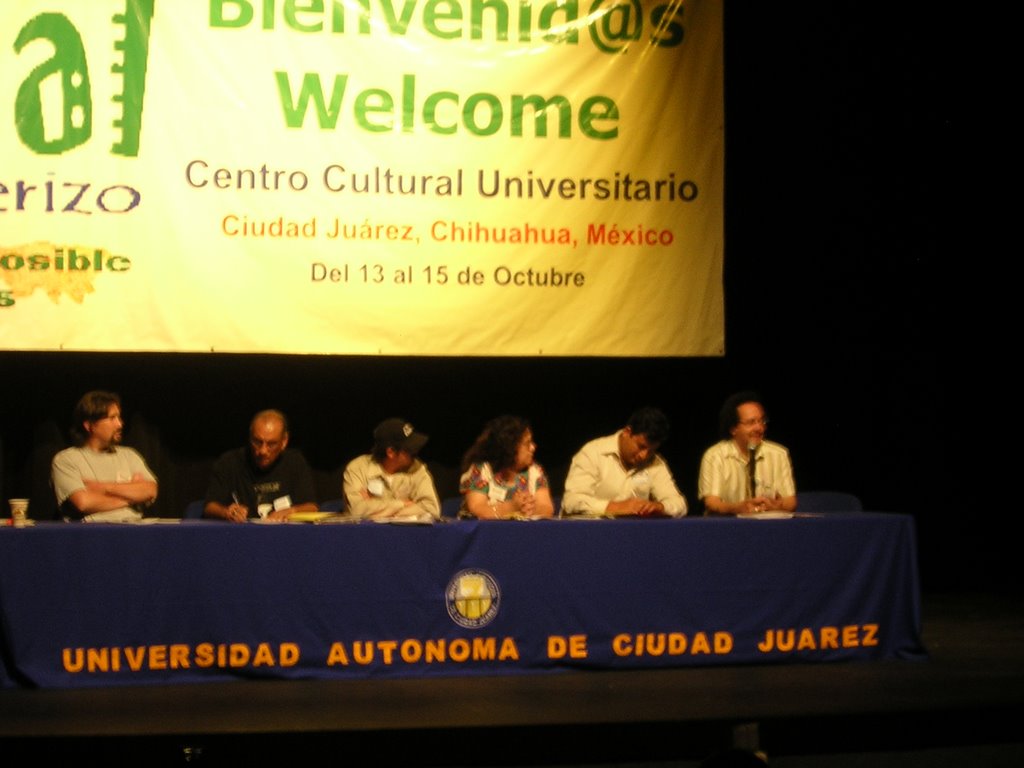
The Border Social Forum (Foro Social Fronterizo), part of the World Social Forum process, was held in Ciudad Juárez, Chihuahua México, on the US-Mexico border with EL Paso, TX from Oct 13th-15th, 2006. Some 1000 people, representing social justice, immigrant rights and labor organizations, as well as indigenous communities, farmworkers, women, youth, African-Americans, and many others, converged on Juárez.

Ciudad Juárez is considered a laboratory for neoliberalism. The first maquiladoras of the global assembly lines, were first implemented in Juárez in the 1960s. It is also the site of mass repression against women maquiladora workers, including dozens of unaccounted murders. In this setting, all the discussions and program sessions were focused on creating alternatives to the militarized border where thousands of women, men and children have died as the result of US border policies and the US Department of Homeland Security.

THURSDAY, Oct 12

Prior to the official opening of the Border Social Forum, a number of border groups (including National Network member, the Agricultural Workers Center) organized a March Against NAFTA and Border Violence. Following that in the afternoon, participants embarked on a “border reality tour” to visit industrial sites and colonias (working class neighborhoods).

FRIDAY, Oct 13

The Border Social Forum had 14 themes or tracks of discussions, workshops, actions and proposals, including Globalization & Integration, US-Mexico Relations, Women & the Border, Labor & Workers, Environment & Justice, Health, Indigenous Peoples, Children & Elders, Youth, Human Rights, Art & Culture, Education & Communication, Food Sovereignty, and of course, Migration.

The organizers kicked-off the Migration track with an opening panel on Migrant Struggles, that discussed the significance of the mass mobilizations in the past year. The panel opened with a presentation by National Network staff member Arnoldo Garcia who described the history of state repression in the region.

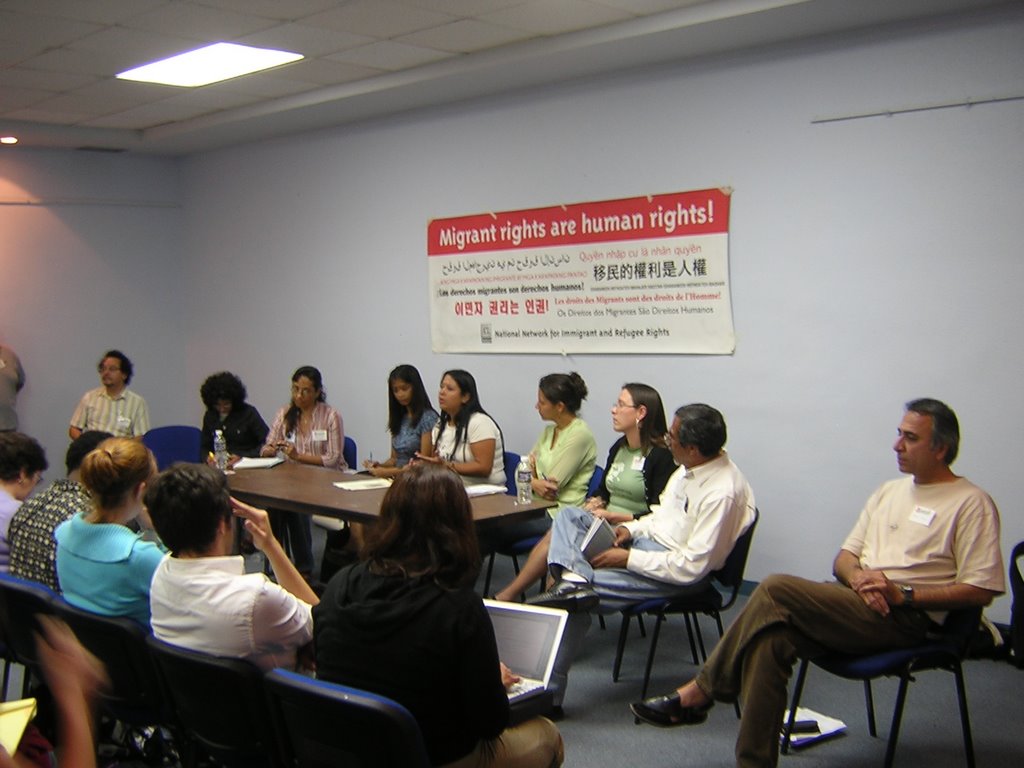
Other National Network members also mainly participated in the Migration track. Coalicion de Derechos Humanos from Arizona, Desis Rising Up & Moving -DRUM from New York, South Asian Network - SAN and Communities for Humane Immigrant Rights of Los Angeles - CHIRLA (both from Los Angeles), St. Peter’s Housing from San Francisco, Colonias Development Council and Agricultural Workers Center (both from the border in Texas), as well as NNIRR Board member Susan Alva, led an organizing workshop called “Building Walls, Destroying Rights: The International Implications of Immigration Legislation.” This workshop analyzed the panorama of anti-immigrant legislation, the immigrant fightback, and a proposal from the National Network for a US campaign for equity, liberty & justice.

SATURDAY, Oct 14

Most members of the National Network, (such as Coalicion de Derechos Humanos, DRUM, SAN, CHIRLA etc.) organized separate workshops on border violence and militarization. DRUM's workshop tied the militarization along the US-Mexico border to that in Palestine. The National Network also participated in a workshop organized by CHIRLA discussing interior immigration law enforcement issues, as well as one organized by the Grassroots Global Justice (GGJ) Alliance on "Black-Brown Alliance Building".

Diverse community organizations and movements at the BSF presented a gamut of discussions, trainings, resources, video and audio to focus discussion on alternatives to the dominant forms of economic development now present. They also looked at the impacts of neoliberalism from indigenous peoples; land use to environmental justice to workers rights and all the challenges that variouos peoples (indigenous communities, working people and people of color) are facing.

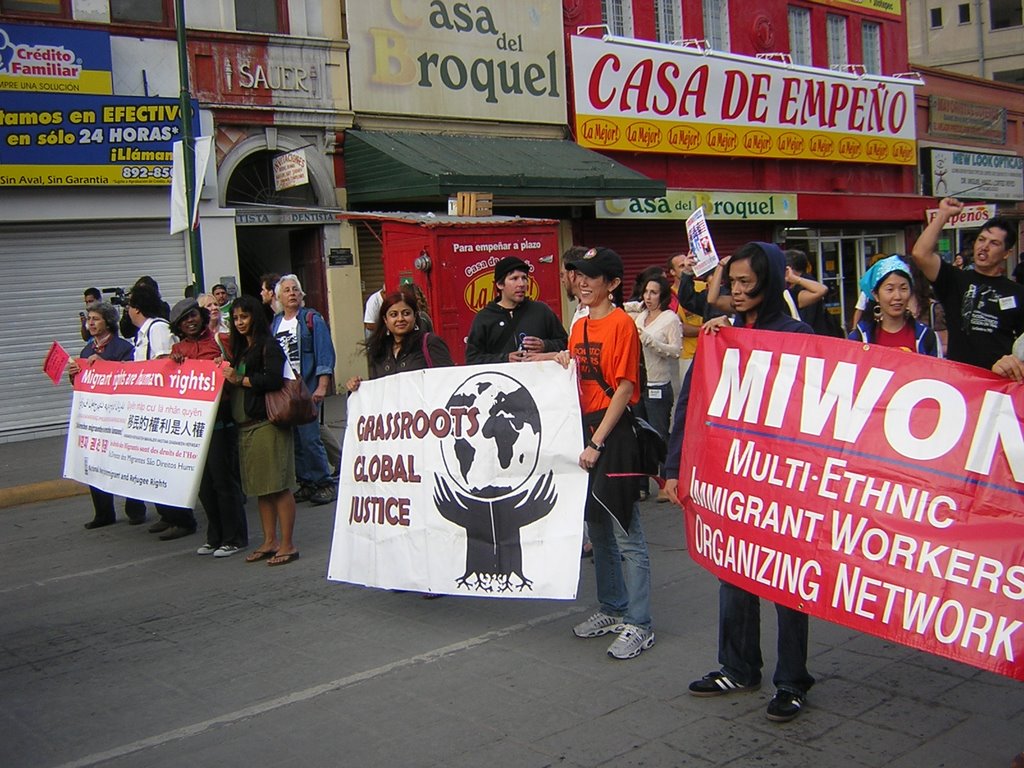
Saturday culminated in a march to the border and symbolic shutdown of it. It was estimated that more than 2000 people took part in this mass march that called for an end to the Border Wall of Death, and the rescinding of militarization at the border, as well the legislation and rhetoric that promotes it.

SUNDAY, Oct 15

Each of the tracks presented a series of conclusions and proposals for action as a followup to the BSF. The National Network presented its proposal for a national campaign in the US to organize a national dialogue on the type of border communities want. This would feature human rights, solidarity and bringing diverse communities to meet their counterparts at the US-Mexico border to challenge the existing militarization and impunity at the border.

The outcomes from the Migration track recognize that the mass mobilizations of 2006 were the result of organized communities, especially over the last 10 years of work. It also emphasized that the current border militarization is part of the low intensity war being waged against migrants and border communities. The Migrant track put forth that toppling the border wall and ending militarization was a top priority.

The BSF participants by acclamation will organize a campaign to defend the rights of communities at the border to stop hate crimes and link it to stopping the war abroad as well. There is also a proposal for organized actions including boycotts and work stoppages for May 1, 2007. And finally, there are plans to hold a 2nd Border SF that is to held on Mexico’s southern border.

Friday, October 13, 2006

NNIRR at the Border Social Forum


La Red Nacional se fue al Foro Social Fronterizo, para El Paso y luego para pasar a Ciudad Juárez hoy, el viernes 13 de octubre.

REMINDER! -- NNIRR -- IRRTI 2006 - Scholarship Applications due Oct 18!

¡Matrículate ahora!
Register now!

Las solicitudes de beca y formularios de matriculación para el
3er Instituto Nacional de Capacitación ed Derechos Inmigrantes y Refugiados
se deben entregar para el dia 18 de octubre.


3rd National Immigrant and Refugee Rights Training Institute
Registration & Scholarship Application Forms are due October 18!

You can register in many ways. / se lo puedes hacer en varias maneras.

1. On paper: Go to our webpage and print out the forms and fax or mail them in:
Por escrito: Vaya a nuestra pagina de Web, imprime los formularios, llenarlos y mandelos a nosotros por fax o correo:
http://www.nnirr.org/projects/IRRTI2006/index.htm

2. Fill out the form online / Ahora, hazlotodo en la línea!
http://www.surveymonkey.com/s.asp?u=216322722859

un abrazo fuerte,
diana

* * * * *
Diana Pei Wu 吳珮珮
Program Director, Education & Capacity Building
National Network for Immigrant & Refugee Rights
310 8th Street, Suite 303
Oakland, CA 94607
Office: (510) 465-1984 x 304
Email: diana@nnirr.org


* * * * *
Diana Pei Wu 吳珮珮
coordinadora, programa de capacitación
red nacional pro derechos inmigrantes y refugiados
310 8th Street, Suite 303
Oakland, CA 94607
tel: (510) 465-1984 x 304
Email: diana@nnirr.org

Thursday, September 21, 2006

Stop Anti-Immigrant Sensenbrenner Bills! Call now.

Versión en español sigue

Stop the Sensenbrenner Anti-Immigrant Laws!
Call Your Two Senators and Representative Now

The Senate is poised to debate and vote on their counterpart legislation to the recently passed House Bill, the Secure Fence Act, H.R. 6061, which would build 700 miles of walls on the U.S.-Mexico border and would require the Department of Homeland Security to achieve "operational control" of the border as a condition before immigration reform is considered.

This week the House is expected to vote on three new immigration enforcement bills introduced by Representative Sensenbrenner (R-WI) from H.R. 4437. Now languishing in Congress, H.R. 4437, if made into law, would make being undocumented a felony and criminalize anyone who hires, assists, ministers to or cares for an undocumented immigrant.

Please call your two Senators and Congressional Representative, tell them:

* Oppose and votes against the proposed laws in the House and Senate that promote border militarization and draconian immigration law enforcement measures. This legislation only criminalizes immigrant workers, families and communities. These policies have created untold suffering; thousands of migrants have already died at the border.

* Support genuine legalization that protects and expands the civil rights, civil liberties and labor rights of immigrant workers, families and communities.

* More border walls and militarization, guest worker programs, and detention and deportations make our communities vulnerable to exploitation and abuses.

* Only legalization with full rights, labor protections, and family reunification will work.

How to Contact your Congressional Delegation

* You can find out how to contact your Senators and Representative at http://www.facts-online.org/naoc_/leg-lookup/search.tcl

* Or you can call the Congressional switchboard and ask to be connected to their offices: (202) 224-3121.

-------------------


¡Alto a las leyes anti-inmigrantes de Sensenbrenner!
Llame a sus dos Senadores y su Representante


El Senado está por debatir y votar sobre su proyecto de ley contraparte a la legislación recientemente aprobada por la Cámara de Representantes, el proyecto de ley "Acta de Muro Seguro ("Secure Fence Act"), H.R. 6061, que permitiría la construcción de case 700 millas de muros en la frontera entre EEUU y México y requeriría que el Departamento de Seguridad Nacional obtuviera el "control operative" de la frontera como precondición para considerer reformas migratorias.

Esta semana la Cámara de Representantes votara sobre tres nuevos proyectos de leyes de control policíaco migratorio, introducidos por el Representante Sensenbrenner (R-WI) de su proyecto de ley H.R. 4437. Ahora pendiente en en el Congreso, H.R. 4437, si llegaría a ser ley, calificaría de felonia el ser indocumentado y criminalizaría a cualquier persona que emplearía, ayudaría, comfortaría y cuidaría al inmigrante indocumentado.

Por favor contacte a sus dos Senadores y Representantes , dígales:

* Opónganse a los proyectos de ley en la Cámara y en el Senado que promueven la militarización de la frontera y medidas represivas de control policíaco de la migración que solo criminalizan a los trabajadores, las familias y las comunidades de inmigrantes. Estas políticas han fomentado el sufrimiento sin cesar; miles de migrantes ya han muerto en la frontera como resultado de estas.

* Apoyen una legalización genuine que proteje y expande los derechos civiles, las libertades civiles y los derechos laborales de las y los trabajadores, familias y comunidades inmigrantes.

* Sólo una legalización con derechos plenos, protecciones laborales, y la reunificación de familias resolverá esta sitaución.

* Más muros y militarización en la frontera, más programas de trabajadores braceros (o huéspedes), y la detención y la deportación hace a nuestras comunidades vulnerables a la exploitación y los abusos.

Cómo contactar a su delegación Congresistas

* Puede hallar la información de contacto de sus 2 Senadores y Representante en:

http://www.facts-online.org/naoc_/leg-lookup/search.tcl

* O puede telefonear a la central telefónica del Congreso y pedir que sea conectado a las oficinas de sus 2 Senadores y Representante en: (202) 224-3121.

------------------


National Network for Immigrant and Refugee Rights
Red Nacional Pro Derechos Inmigrantes y Refugiados
310 8th Street Suite 303
Oakland, CA 94607
Tel (510) 465-1984
Fax (510) 465-1885
www.nnirr.org

Wednesday, September 13, 2006

Photos 2


MEDIA ADVISORY: Immigrant Communities in New York Join in Solidarity Rally with Migrant Leaders from Around the World on Eve of UN High Level Dialogue

For immediate release:
September 13, 2006


Immigrant Communities in New Yorkand Migrant Leaders from Around the World rally to pressure UN High Level Dialogue on Migration & Development


What: Migrant Rights Rally & Media Briefing – rain or shine

New York, NY -- Organizational representatives and participants of the Community Dialogue on Migration, Development and Human Rights will gather on Thursday in Dag Hammarskjold Plaza across from the United Nations to voice their demands for migration policies recognizing and respecting basic human rights and dignity. The UN High Level Dialogue on Migration and Development, in which very few participants from civil society have been invited to participate, is taking place this week at the UN on September 14 and 15, 2006. While migration is increasingly being discussed within the High Level Dialogue in economic terms, and in terms of filling labor needs of countries’ economic development, migrant communities from around the world insist that the High Level Dialogue directly include the voices of affected communities and highlight the economic and political factors that displace communities and push people to migrate. In addition, any outcomes of the High Level Dialogue should counteract repressive immigration policies that curtail migrants’ rights.

When: Thursday, September 14, 2006; 5:00 pm – 7:00 pm

Where: Dag Hammarskjold Plaza (across from UN); East 44th Street & 1st Avenue; New York City.

Who:
* Mary Robinson, Realizing Rights: Ethical Globalization Initiative (EGI)
* Ellene Sana, Migrant Forum Asia (Phillippines)
* Catherine Tactaquin, National Network for Immigrant & Refugee Rights – NNIRR (USA)
* Carolyn de Leon Hermogenes, CAAAV: Organizing Asian Communities (New York)
* Natividad Obeso, MIREDES (Argentina)

Visuals & Audio: Rally with people from all over the world and New York; lots of colorful signs and art banners, NGO organizational representatives and participants from over 20 countries (including: Chile, Taiwán, Argentina, Phillippines, Thailand, Peru, Bolivia, Colombia, Brazil, Mexico, USA, Germany, Italy, Singapore, Indonesia, Lebanon, India, Bangladesh, Sri Lanka, Burma, Spain, Bosnia Herzegovina) speaking as many languages!


For more information, contact:

Jose Maria Dimaandal (Migrant Forum in Asia)

+ 63 (927) 877-5810
j_mod@rocketmail.com

Arnoldo Garcia (la Red Nacional pro Derechos Inmigrantes y Refugiados)
(510) 928-0685
agarcia@nnirr.org

Organized By: Migrant Rights International, Migrant Forum Asia, National Network for Immigrant and Refugee Rights, UN HLD Working Group and New York UNHLD Working Group.

-- 30 --

Tuesday, September 12, 2006

Photos from out meetings / fotos de las reuniones


Civil Society Parallel Events and Activities on Migration, Development and Human Rights

Activities under the Civil Society Parallel Events on Migration, Development and Human Rights*

September 12, 2006

(1) Lobbying/Embassy Hopping

September 12 is dedicated to conducting lobbying work with key permanent government missions (embassies) in New York so that the civil society could raise its concerns about the UNHLD process, deliver position papers and discuss key issues on migration and development from a civil society perspective.
Venue: Queens College Worker Education Extension Center located at 25 W 43rd Street Between 5th & 6th, New York City
Time: 9:00 to 9:15 am for the FINAL BRIEFING

(2) International Migrants Rights Solidarity and Cultural Evening

To raise awareness, dialogue, and connect migrants rights struggles from around the world with the local migrant/immigrant rights struggles in New York and the US
Venue: Judson Memorial Church (55 Washington Square South, between Thompson & Sullivan Streets)
Time: 6:00 to 9:00 pm

September 13-15, 2006

Community Dialogue on Migration, Development and Human Rights

To highlight key migration issues from a community perspective, share experiences on how migrant response organizations in various countries and regions are working to achieve international recognition and enforcement of migrants’ human rights, collectively inform participants on the intended goals of the UNHLD and its policy implications for global migration, human rights and development.

Topics:
1. Global Economic Systems: Empty Promises for Developing Countries and Forced Migration
2. War and Armed Conflict and its Impact on Local and Migrant Populations
3. Shared Responsibilities and Co-Development between sending and destination countries: Creating Strategies for Compensation and Remittances
4. Strategies for Advancing the Rights of Undocumented Migrant Workers in the Global Economy
5. National Immigration Policy Regimes: The ‘Race to the Bottom’ & Challenges for the Implementation of International Migrants Human Rights Standards
6. Enforcing Borders: An International Snapshot of How Border Enforcement Violates Core Standards of Migrants Human Rights
7. The Abuse of Migrant Workers with Impunity
8. The Feminization of Migration
9. The Migration-Trafficking Nexus
10 The Global Strategy Session for Migrant Domestic Workers Rights
11. Migrant LGBT (Lesbian, Gay, Bisexual and Transgendered) Rights

Venue: Queens College Worker Education Extension Center located at 25 W 43rd Street Between 5th & 6th, New York City
Time: 9:00 to 5:00 pm


For interviews and more information, please contact:

Joey Dimaandal, Media Officer for the MRI Civil Society Parallel Events during the United Nations High-Level Dialogue on Migration and Development in New York City
Tel: +639175267171, +639278775810
Email: j-mod@rocketmail.com
Address: West Side YMCA, 5 West 63rd Street between Broadway and Central Park West, New York City.

Arnoldo Garcia (For Spanish language media organizations), National Network for Immigrant and Refugee Rights www.nnirr.org
Tel +1 510 928 0685
Email: agarcia@nnirr.org

* MFA is a regional network of 260 migrant workers associations, trade unions and NGOs in Asia. The contact information of MFA:
Regional Coordinator: William Gois
Address: 59-B Malumanay Street, Teachers’ Village West, Quezon City, Philippines
Email address: mfa@pacific.net.hk Web: www.mfasia.org

** Migrant Rights International has members in Asia, Europe, North America and Latin America.

Migrants’ advocates to meet UN Permanent Mission to push for migrants rights in the upcoming UN High-Level Dialogue

[Sigue en espanyol]

September 12, 2006

Migrants’ advocates to meet UN Permanent Mission to push for migrants rights in the upcoming UN High-Level Dialogue

(New York City) Civil Society leaders and migrants’ rights advocates from the United States, Asia, the Middle East, Latin America and Europe gather in New York City today to meet with permanent mission representatives to the United Nations (UN) to present civil society perspectives on migration and development. The embassy visits are being organized by Migrant Forum in Asia (MFA) and Migrants Rights International (MRI) ahead of the United Nations High-Level Dialogue on Migration and Development on September 14-15, 2006.

“As part of the civil society, we exercise our right to speak out and deliver our position on critical issues related to migration and development,” says Sajida Ally, Programme Consultant of MRI. “It is imperative for us to present our perspectives to the permanent mission and government representatives. These are the people who will influence the course of the debate at the High-Level Dialogue. It is essential that they base discussions on the real situation of migrants’ human rights.”

According to MFA Regional Coordinator William Gois, the Asian delegates managed to secure appointments with the permanent missions of the Philippines, Bangladesh, Sri Lanka, Indonesia and South Korea. The Asian delegates called the Asian Alliance for Migration, Development and Human Rights will be presenting their recommendations to their government counterparts including the call to ratify and implement the 1990 International Convention on the Protection of the Rights of All Migrant Workers and Members of their Families as well as the relevant labor standards and other migration-related conventions of the International Labour Organization.

“Labor migration is quite dynamic in the Asian region which now hosts 53 million migrants, and it fast becoming an intra-regional phenomenon with around 2.5 million people a year moving within the region, says Mr. Gois. “The policy framework that will be created at the High-Level Dialogue as indicated by the Secretary General’s report leans more towards harnessing remittances as an economic benefit of migration. We are also concerned with the ‘co-development’ strategy wherein civil society has little or no participation at all. The main stakeholder in the migration process is the migrants themselves. Therefore, the policy on migration must be based primarily on the needs of people migrating,” adds Mr Gois.

MRI and MFA recommends for the establishment of a Permanent Forum on Migration that is inclusive and participatory. The group says that the forum should be a place to stimulate new ideas, approaches and perspectives in understanding migration and to enforce government commitments towards these.

“The forum should likewise include issues related to the contemporary nature of migration. A lot of things are happening and it is not just remittances. We must recognize that migration is a complex issue that should be based on human rights framework,” says Ms. Ally.

# # #

The Civil Society Parallel Events on Migration, Development and Human Rights are being held at the Queens College Workers Education Extension Center, 25 W 43rd Street between 5th and 6th Avenues in New York City until September 15, 2006.

For interviews and more information, please contact:
Joey Dimaandal
Tel: +639175267171, +639278775810
Email: j-mod@rocketmail.com
Address: West Side YMCA, 5 West 63rd Street between Broadway and Central Park West, New York City.

Arnoldo Garcia (For Spanish language media organizations)
Tel +1 510 928 0685
Email: agarcia@nnirr.org

+++

PARA DIFUSION INMEDIATA
12 de Septiembre, 2006

Defensores de derechos migrantes se reunirán con la Misión Permanente de la ONU exigiendo el cumplimiento de los derechos de las y los trabajadores migrantes en las reuniones próximas del Diálogo de Alto Nivel de la ONU

(Ciudad de Nueva York) Líderes y defensores de los derechos de las y los migrantes en la Sociedad Civil de los Estados Unidos, Asia, el Medio Oriente, América Latina y Europa están en Nueva York hoy para reunirse con representantes de la misión permanente de las Naciones Unidas (ONU) para presentar las perspectivas de la sociedad civil sobre la migración y el desarrollo. Las visitas a las embajadas han sido organizadas por el Foro Migrante en Asia (MFA, Migant Forum in Asia) y la Internacional de Derechos Migrantes (MRI, Migrant Rights International) en anticipación del Diálogo de Alto Nivel sobre la Migración y el Desarrollo de las Naciones Unidas el 14-15 de Septiembre, 2006.

“Como parte de la sociedad civil, ejercemos nuestro derecho a alzar la voz y entregarles nuestra perspectiva sobre temas críticas relacionados a la migración y el desarrollo,” dice Sajida Ally, Consultante de Programa de la MRI. “Es imperativo que nosotras presentemos nuestras posiciones a la misión permanente y los representantes de los gobiernos. Estos son los que influirán el curso del debate en el Diálogo de Alto Nivel. Es esencial que sus discusiones sean a base de la situación real de los derechos humanos de los y las migrantes.”

Según el coordinador regional del Foro Migrante en Asia (MFA), William Gois, los delegados asiáticos lograron conseguir reuniones con las misiones permanentes de las Filipinas, Bangladesh, Sri Lanka, Indonesia y Corea del Sur. Los delegados asiáticos llamados la Alianza Asiática por la Migración, Desarrollo y los Derechos Humanos están presentando sus recomendaciones a sus contrapartes gubernamentales incluyendo el llamado a ratificar e implementar la Convención Internacional sobre la Protección de los Derechos de los Trabajadores Migratorios y los Miembros de sus Familias de 1990 así como también las normas laborales relevantes y otras convenciones relacionadas a la migración a la Organización Internacional del Trabajo.

“La migración de trabajadores es muy dinámica en la región asiática la cual ahora es anfitriona a 53 millones de migrantes, y que rápidamente se está convirtiendo en un fenómeno intra-regional con unos 2.5 millones de personas por año moviéndose dentro de la región,” declara el Sr. Gois. “El marco político que será creado en el Diálogo de Alto Nivel como indicado por el informe del Secretario General tiende hacia el sometimiento de las remesas como un beneficio económico de la migración. Entonces, la política sobre migración tiene que ser basada principalmente en las necesidades de los pueblos en migración mismos,” añade el Sr. Gois.

La MRI y el MFA recomiendan el establecimiento de un Foro Permanente sobre la Migración que es inclusivo y participativo. El grupo dice que el foro debe de ser un espacio para estimular nuevas ideas, trayectorias y perspectivas en el entendimiento de la migración y para asegurar el cumplimiento de los gobiernos hacia éstas.

“El foro debe de incluir temas relacionados a la naturaleza actual de la migración. Muchas cosas están sucediendo y no sólo remesas. Tenemos que reconocer que la migración es un tema complejo que debe de ser basado en marco de los derechos humanos,” dice la Sra. Ally.

###

Los Evento Paralelos de la Sociedad Civil sobre a Migración, el Desarrollo, y los Derechos Humanos están siendo convocados en el Queens College Workers Education Extension Center (Centro Extensión Educativo de Trabajadores del Colegio de Queens), 25 W 43rd Street entre las Avenidas 5t y 6ta en la Ciudad de Nueva York City hasta el 15 de Septiembre, 2006.

Para entrevistas y más información, por favor de contactar:

Joey Dimaandal, portavoz de MRI para los eventos paralelos de la sociedad civil durante el Diálogo de Alto Nivel sobre Migración y Desarrollo de las Naciones Unidas en la Ciudad de Nueva York
Tel +639175267171, +639278775810
Correo electrónico: j-mod@rocketmail.com
Dirección: West Side MICA, 5 West 63rd Street, entre la Broadway y Central Park West, Ciudad de Nueva York

Arnoldo García (para los medios de comunicación en español)
Tel +1 (510) 928-0685
Correo electrónico: agarcia@nnirr.org

* MFA es una red regional de 260 asociaciones, sindicatos y ONGs de trabjadores migrantes en Asia. La información de contacto de MFA:
Coordinador regional: William Gois
Dirección: 59-B Malumanay Street, Teachers’ Village West, Quezón City, Las Filipinas
Correo electrónico: mfa@pacific.net.hk Web: www.mfasia.org

** La Internacional de Derechos Migrantes (MRI) tiene miembros en Asia, Europa, América del Norte y América Latina.

--30--
PRESS RELEASE [Sigue en espanyol]
September 12, 2006

Migrants’ advocates to meet UN Permanent Mission to push for migrants rights in the upcoming UN High-Level Dialogue

(New York City) Civil Society leaders and migrants’ rights advocates from the United States, Asia, the Middle East, Latin America and Europe gather in New York City today to meet with permanent mission representatives to the United Nations (UN) to present civil society perspectives on migration and development. The embassy visits are being organized by Migrant Forum in Asia (MFA) and Migrants Rights International (MRI) ahead of the United Nations High-Level Dialogue on Migration and Development on September 14-15, 2006.

“As part of the civil society, we exercise our right to speak out and deliver our position on critical issues related to migration and development,” says Sajida Ally, Programme Consultant of MRI. “It is imperative for us to present our perspectives to the permanent mission and government representatives. These are the people who will influence the course of the debate at the High-Level Dialogue. It is essential that they base discussions on the real situation of migrants’ human rights.”

According to MFA Regional Coordinator William Gois, the Asian delegates managed to secure appointments with the permanent missions of the Philippines, Bangladesh, Sri Lanka, Indonesia and South Korea. The Asian delegates called the Asian Alliance for Migration, Development and Human Rights will be presenting their recommendations to their government counterparts including the call to ratify and implement the 1990 International Convention on the Protection of the Rights of All Migrant Workers and Members of their Families as well as the relevant labor standards and other migration-related conventions of the International Labour Organization.

“Labor migration is quite dynamic in the Asian region which now hosts 53 million migrants, and it fast becoming an intra-regional phenomenon with around 2.5 million people a year moving within the region, says Mr. Gois. “The policy framework that will be created at the High-Level Dialogue as indicated by the Secretary General’s report leans more towards harnessing remittances as an economic benefit of migration. We are also concerned with the ‘co-development’ strategy wherein civil society has little or no participation at all. The main stakeholder in the migration process is the migrants themselves. Therefore, the policy on migration must be based primarily on the needs of people migrating,” adds Mr Gois.

MRI and MFA recommends for the establishment of a Permanent Forum on Migration that is inclusive and participatory. The group says that the forum should be a place to stimulate new ideas, approaches and perspectives in understanding migration and to enforce government commitments towards these.

“The forum should likewise include issues related to the contemporary nature of migration. A lot of things are happening and it is not just remittances. We must recognize that migration is a complex issue that should be based on human rights framework,” says Ms. Ally.

# # #

The Civil Society Parallel Events on Migration, Development and Human Rights are being held at the Queens College Workers Education Extension Center, 25 W 43rd Street between 5th and 6th Avenues in New York City until September 15, 2006.

For interviews and more information, please contact:
Joey Dimaandal
Tel: +639175267171, +639278775810
Email: j-mod@rocketmail.com
Address: West Side YMCA, 5 West 63rd Street between Broadway and Central Park West, New York City.

Arnoldo Garcia (For Spanish language media organizations)
Tel +1 510 928 0685
Email: agarcia@nnirr.org

+++

12 de Septiembre, 2006

Defensores de derechos migrantes se reunirán con la Misión Permanente de la ONU exigiendo el cumplimiento de los derechos de las y los trabajadores migrantes en las reuniones próximas del Diálogo de Alto Nivel de la ONU

(Ciudad de Nueva York) Líderes y defensores de los derechos de las y los migrantes en la Sociedad Civil de los Estados Unidos, Asia, el Medio Oriente, América Latina y Europa están en Nueva York hoy para reunirse con representantes de la misión permanente de las Naciones Unidas (ONU) para presentar las perspectivas de la sociedad civil sobre la migración y el desarrollo. Las visitas a las embajadas han sido organizadas por el Foro Migrante en Asia (MFA, Migant Forum in Asia) y la Internacional de Derechos Migrantes (MRI, Migrant Rights International) en anticipación del Diálogo de Alto Nivel sobre la Migración y el Desarrollo de las Naciones Unidas el 14-15 de Septiembre, 2006.

“Como parte de la sociedad civil, ejercemos nuestro derecho a alzar la voz y entregarles nuestra perspectiva sobre temas críticas relacionados a la migración y el desarrollo,” dice Sajida Ally, Consultante de Programa de la MRI. “Es imperativo que nosotras presentemos nuestras posiciones a la misión permanente y los representantes de los gobiernos. Estos son los que influirán el curso del debate en el Diálogo de Alto Nivel. Es esencial que sus discusiones sean a base de la situación real de los derechos humanos de los y las migrantes.”

Según el coordinador regional del Foro Migrante en Asia (MFA), William Gois, los delegados asiáticos lograron conseguir reuniones con las misiones permanentes de las Filipinas, Bangladesh, Sri Lanka, Indonesia y Corea del Sur. Los delegados asiáticos llamados la Alianza Asiática por la Migración, Desarrollo y los Derechos Humanos están presentando sus recomendaciones a sus contrapartes gubernamentales incluyendo el llamado a ratificar e implementar la Convención Internacional sobre la Protección de los Derechos de los Trabajadores Migratorios y los Miembros de sus Familias de 1990 así como también las normas laborales relevantes y otras convenciones relacionadas a la migración a la Organización Internacional del Trabajo.

“La migración de trabajadores es muy dinámica en la región asiática la cual ahora es anfitriona a 53 millones de migrantes, y que rápidamente se está convirtiendo en un fenómeno intra-regional con unos 2.5 millones de personas por año moviéndose dentro de la región,” declara el Sr. Gois. “El marco político que será creado en el Diálogo de Alto Nivel como indicado por el informe del Secretario General tiende hacia el sometimiento de las remesas como un beneficio económico de la migración. Entonces, la política sobre migración tiene que ser basada principalmente en las necesidades de los pueblos en migración mismos,” añade el Sr. Gois.

La MRI y el MFA recomiendan el establecimiento de un Foro Permanente sobre la Migración que es inclusivo y participativo. El grupo dice que el foro debe de ser un espacio para estimular nuevas ideas, trayectorias y perspectivas en el entendimiento de la migración y para asegurar el cumplimiento de los gobiernos hacia éstas.

“El foro debe de incluir temas relacionados a la naturaleza actual de la migración. Muchas cosas están sucediendo y no sólo remesas. Tenemos que reconocer que la migración es un tema complejo que debe de ser basado en marco de los derechos humanos,” dice la Sra. Ally.

###

Los Evento Paralelos de la Sociedad Civil sobre a Migración, el Desarrollo, y los Derechos Humanos están siendo convocados en el Queens College Workers Education Extension Center (Centro Extensión Educativo de Trabajadores del Colegio de Queens), 25 W 43rd Street entre las Avenidas 5ta y 6ta en la Ciudad de Nueva York City hasta el 15 de Septiembre, 2006.

Para entrevistas y más información, por favor de contactar:

Joey Dimaandal, portavoz de MRI para los eventos paralelos de la sociedad civil durante el Diálogo de Alto Nivel sobre Migración y Desarrollo de las Naciones Unidas en la Ciudad de Nueva York
Tel +639175267171, +639278775810
Correo electrónico: j-mod@rocketmail.com
Dirección: West Side MICA, 5 West 63rd Street, entre la Broadway y Central Park West, Ciudad de Nueva York

Arnoldo García (para los medios de comunicación en español)
Tel +1 (510) 928-0685
Correo electrónico: agarcia@nnirr.org

* MFA es una red regional de 260 asociaciones, sindicatos y ONGs de trabjadores migrantes en Asia. La información de contacto de MFA:
Coordinador regional: William Gois
Dirección: 59-B Malumanay Street, Teachers’ Village West, Quezón City, Las Filipinas
Correo electrónico: mfa@pacific.net.hk Web: www.mfasia.org

** La Internacional de Derechos Migrantes (MRI) tiene miembros en Asia, Europa, América del Norte y América Latina.

--30--

Monday, September 11, 2006

Migrants rights advocates pay tribute to undocumented migrant workers killed in 9-11; saying no human being is illegal

FOR IMMEDIATE RELEASE
September 11, 2006

Migrants rights advocates pay tribute to undocumented migrant workers killed in 9-11; saying no human being is illegal

(New York City) Migrant workers and migrant rights organizations from the United States, Asia, Africa and Europe will converge at the Ground Zero this evening and join the New York-based immigrant rights advocates to recognize the heroism of hundreds of undocumented migrant workers killed in the September 2001 terror attacks. The early evening vigil also aims to challenge repressive migration policies across the globe and call for the ‘decriminalization’ of undocumented workers who are called illegal workers in many countries.

“Migrants are among the victims of that heinous and barbaric attack five years ago. Some of them did not have the proper documents as well. Would you call those people, who had served coffee, mopped the floors and cleaned the windows of the World Trade Center, illegal? They sacrificed their lives for this country during the 9-11 attacks,” says Catherine Tactaquin, Executive Director of the US-based National Network for Immigrant and Refugee Rights and member of Migrants Rights International. “Tens of thousands of migrant workers in the US face daily sacrifices including loss of life, as they toil to provide safe and healthy lives for their families,” she adds.
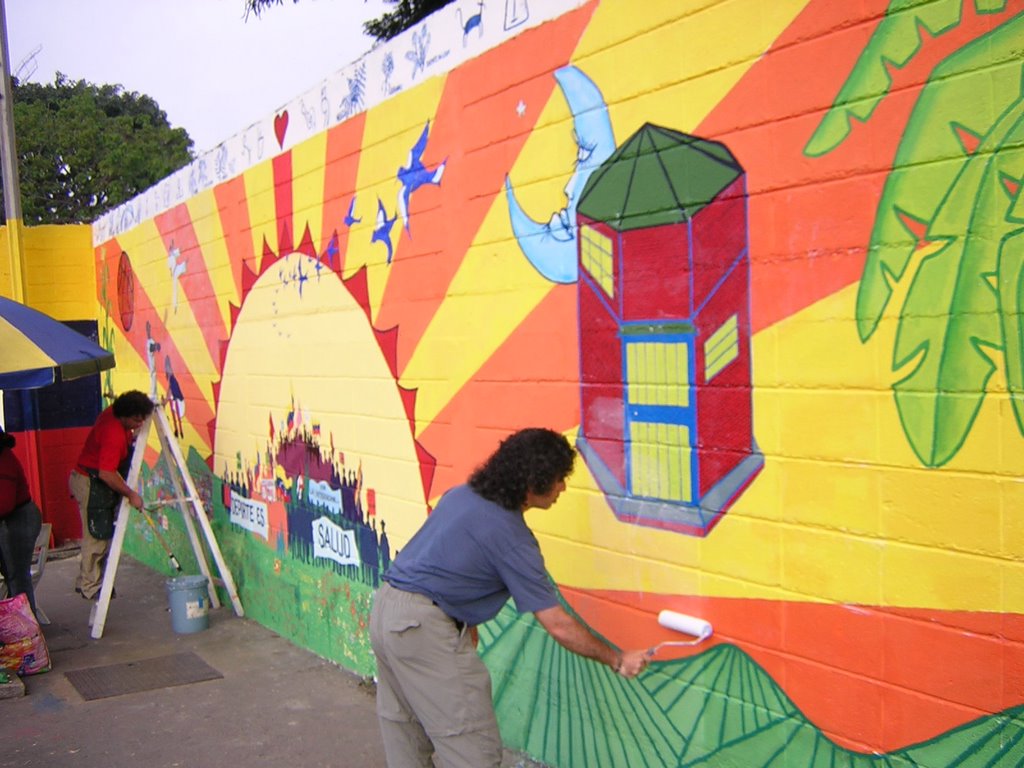
“An undocumented worker is not illegal. No human being is illegal. Undocumented migrant workers have the same rights as any other worker. Both contribute to the companies they worked for, the countries they reside in and the countries they will go home to,” says William Gois, the Regional Coordinator of Migrant Forum in Asia (MFA).

According to Mr. Gois, categorizing migrant workers who have no proper documents as illegals allows governments to conduct activities that will violate the rights of the migrants. In Asia, MFA has repeatedly condemned the Malaysian and South Korean governments for the violent crackdowns and arbitrary expulsions against undocumented workers.

“Stop the crackdowns and vicious raids. These are not the actions of mature and democratic societies. What we need here is the genuine recognition of the tremendous contribution of migrant workers to the development of host and home countries. These are the facts. Without these workers, there will be no food on your table, no clean clothes in your closet and no roof over your heads,” Mr. Gois says.

The various migrant rights groups are in New York City to attend and observe the United Nations High-Level Dialogue on Migration and Development on September 14 and 15. Ms. Tactaquin says that their group will also be organizing community dialogues on migration and talking with the different permanent mission representatives of the UN Member States to give their inputs on migration and highlight the perspectives of migrants and migrant civil society organizations.#

For interviews and more information, please contact:

Joey Dimaandal, (English only) Media Officer for the MRI Civil Society Parallel Events during the United Nations High-Level Dialogue on Migration and Development in New York City Tel: +639175267171, +639278775810
Email: https://webmail.speakeasy.net/cgi-bin/compose?id=00a9fe51cfed1004a6c7708200358e0e8d1&new=&xsl=compose.xsl&to=j-mod@rocketmail.com
Address: West Side YMCA, 5 West 63rd Street between Broadway and Central Park West, New York City.

Arnoldo Garcia (For Spanish language media organizations)
Tel +1 510 928 0685
Email: agarcia@nnirr.org

Diana Pei Wu (Mandarin Chinese)
Tel +1 510 847 9339
Email: Diana@nnirr.org

* MFA is a regional network of 260 migrant workers associations, trade unions and NGOs in Asia. The contact information of MFA: Regional Coordinator: William Gois Address: 59-B Malumanay Street, Teachers’ Village West, Quezon City, Philippines Email address: https://webmail.speakeasy.net/cgi-bin/compose?id=00a9fe51cfed1004a6c7708200358e0e8d1&new=&xsl=compose.xsl&to=mfa@pacific.net.hk Web: http://www.mfasia.org/

** Migrant Rights International has members in Asia, Europe, North America and Latin America

Monday, January 30, 2006

Growing Hope: Building a Movement of Change

by Colin Rajah reporting from Caracas, Venezuela

Have I mentioned that this is NNIRR's 4th direct participation in the WSF? One would assume that we would be "World Social Forumed-out" by now. But there is something different this time, a growing energy, a building strength, a burning hope that change CAN and WILL come about.

Maybe its the growing recognition (finally!) that immigrants face some of the worse oppressions in this dominant economic paradigm, and that this only develops the inner strenght in our communities as we fight back and continue to build healthy, sustainable and just economies.

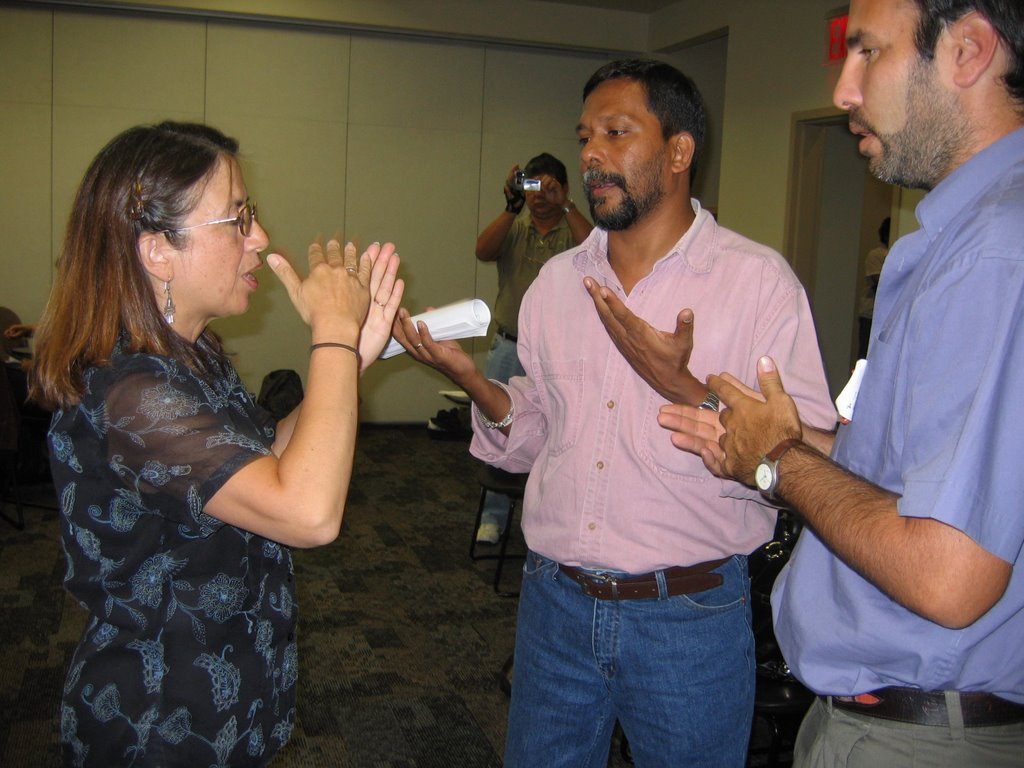
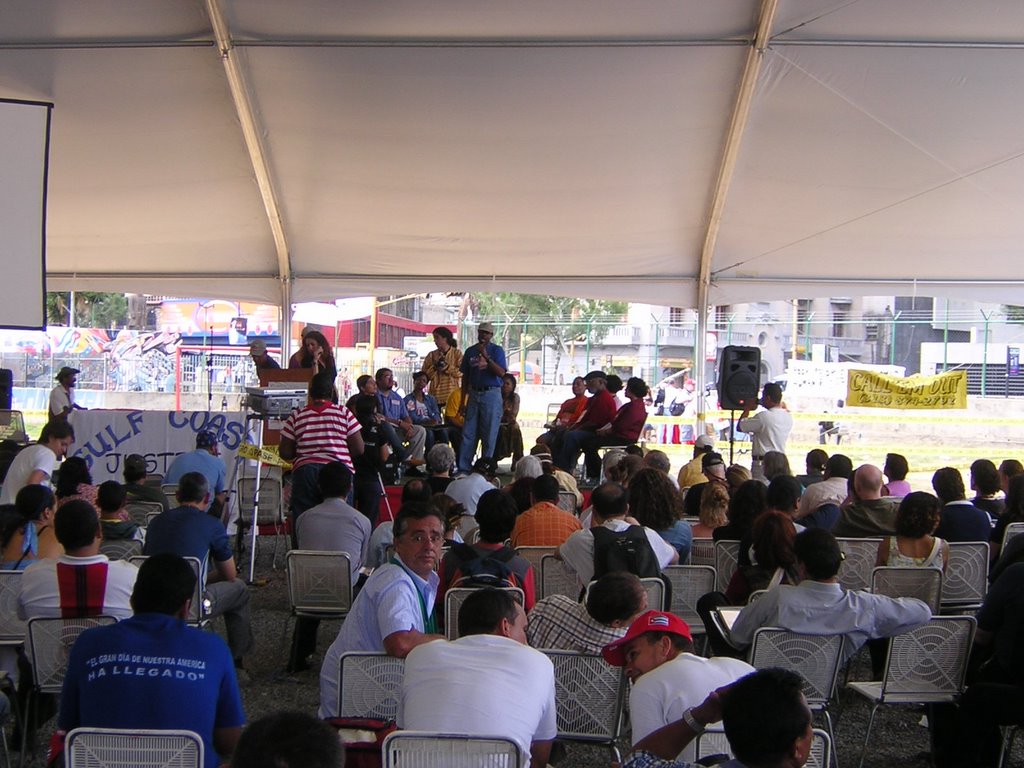
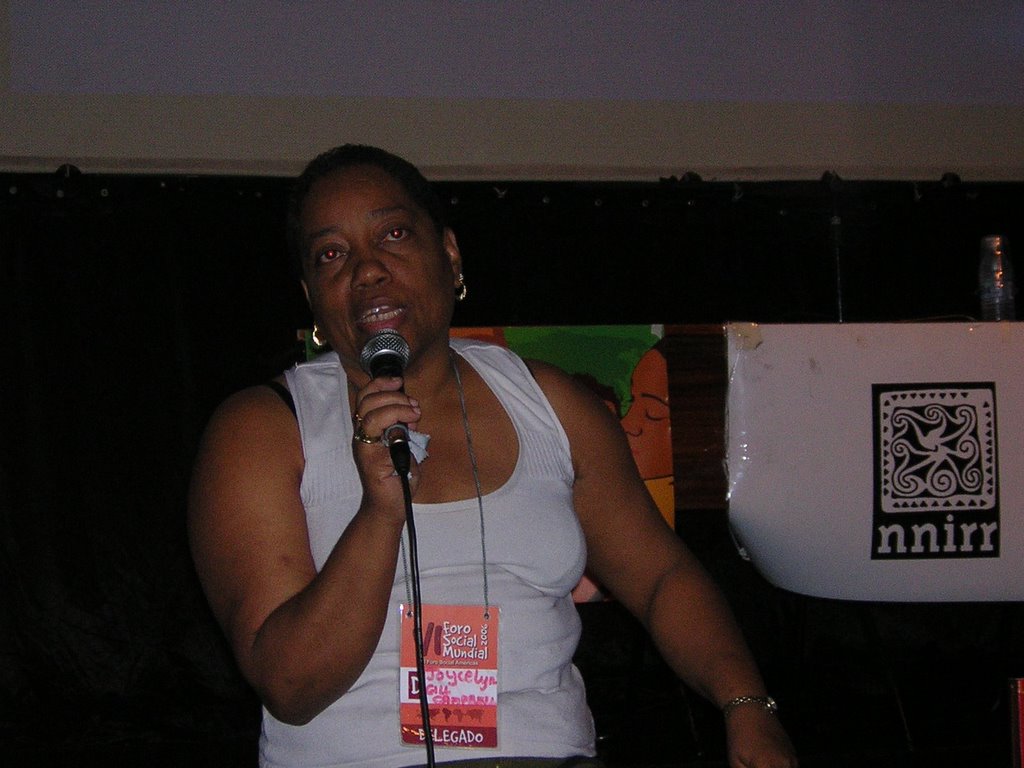
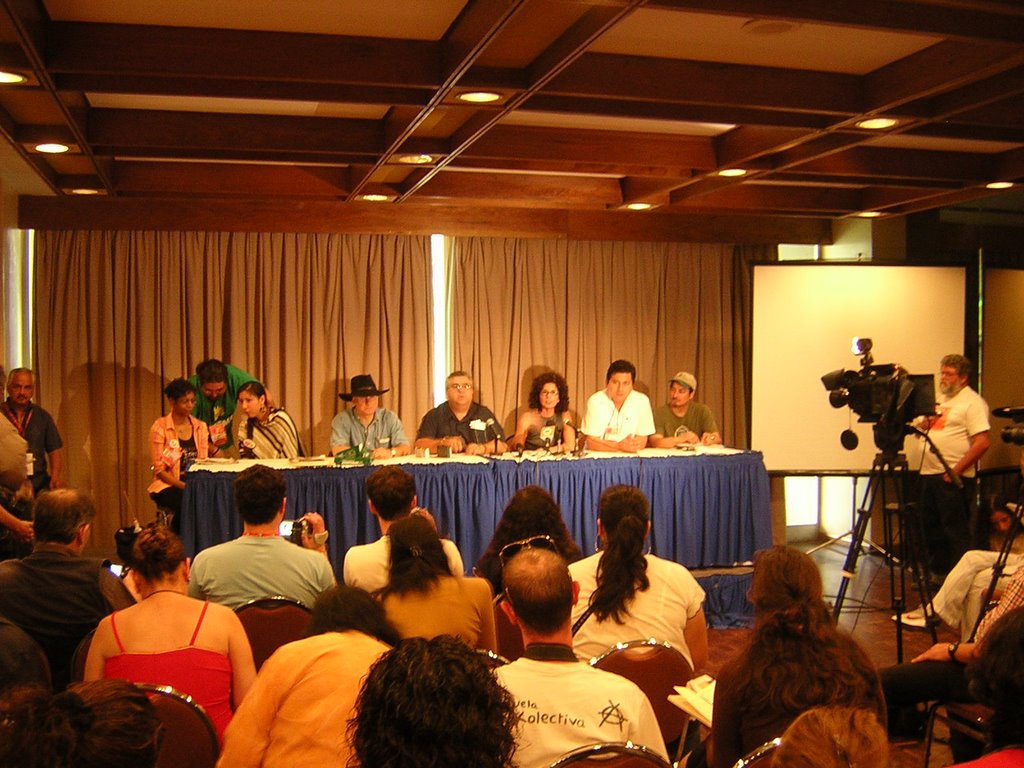
The numerous workshops and panels NNIRR and our members were invited to speak at, is an indicator of this. Whether it was Luckner Millien (from the FL Farmworkers Association) giving testimony about being in a detention camp and being deported to Haiti to hundreds at the US Oppression workshop, or Susan Alva (NNIRR board member) presenting analysis on migration policies at a panel on Overcoming the Neoliberal Economy, or Joycelyn Campbell (from Domestic Workers United) describing how they are abused by their employers and how they've fought back, these are living testimonies the struggles faced by immigrant communities not just oppress but empower us.

At NNIRR's own workshop, not only Luckner's and Joyce's testimonies, but also that of Chayya Chhoum (CAAAV), Chris Punongbayan (FAA), Greg Simons (CHIRLA), Mari Rose Taruc (APEN), Genaro Lopez-Rendon (SWU) and other diverse immigrant communities in the US, alongside those from Peruvian refugees in Argentina, indigenous migrants from Colombia, and Ecudorian migrants from Central America, speak courageous words to the worlwide oppression imposed by an economic and militaristic force. And yet, we're not victims, not mere survivors, but we are organizing growing movements of change that are converging here.

Venezuela itself creates cause for hope. The new National ID might seem an imposition on civil liberties to those of us in the US, it is in actuality a broad amnesty program to provide documentation to undocumented migrants here, and along with that, the rights and privileges equal to any other Venezuelan citizen. With immigration accounting for about 80% of the new population growth, and about 90% of the numerous street vendors here being migrants from Colombia and other neighboring regions, it is no doubt that this will enable migrant to go beyond the underground economy and into more sustainable livelihoods, while having recognized and enforced rights.

And if thats not enough to create some hope, then consider this latest development that has just emerged out of a series of meetings and exchanges in here the past couple of days. A mass northward mobilization of indigenous and other peoples from around Latin America, converging with a mobilization of immigrant and other communities from North America (led by GGJ and its members organizations including NNIRR), at the US-Mexico border this May, with popular actions at the border wall, and a border social forum, all involving tens of thousands of people! At the press conference to annouce this, Susan and Ruben Solis (from NNIRR's ally organization, Southwest Workers Union) described how while immigration policies have been increasingly repressive, for many years there have been growing mobilizations to reclaim and tear down the inhumane borders. And this is the opportunity we've been waiting for! Keep posted here and at NNIRR.org for more developments on this soon...

Meanwhile, we leave here with this hope. While things just seem to get worse and worse on the surface, there is a powerful undercurrent as we build monumental movements across the Americas and the world that will bring about significant social change. The time seems to be coming and immigrant communities are poised to be at the forefront of these.


Wednesday, January 25, 2006

Logistical Nightmares at the 6th WSF

by Colin Rajah reporting from Caracas, Venezuela

The logistics were a nightmare. The main highway from the airport runs across a bridge that collapsed significantly a week ago. Timing could not be worse (and rumors of sabotage are rampant), as over 100,000 people from around the Americas converge into Caracas for the World Social Forum this week.

Most of our Grassroots Global Justice (GGJ) delegation made it in safe and sound however, in spite of 6-hour waits at the airport, 3-hour bus rides through windy mountain roads, and navigating massive traffic jams in the city to get to our hotel and orientation. And when we did, it was a coming home of sorts - connections and relationships among a vastly immigrant, people-of-color, grassroots delegation tug at not just the political, but our emotional bonds.

As other logistical "challenges" faced our orientation and meeting with a local host organization, we endured that with patience and tenacity. We formed out workgroups to embark on our mission this week - to make international/hemispheric grassroots connections with other communities in the Global South, and to challenge the stereotypes about U.S. society and communities.

Most importantly for us, presenting a broader, more diverse representation of immigrant communities in the U.S. who have to endure forced displacements in their home countries, and then oppressive political and economic forces in the U.S., is vital.

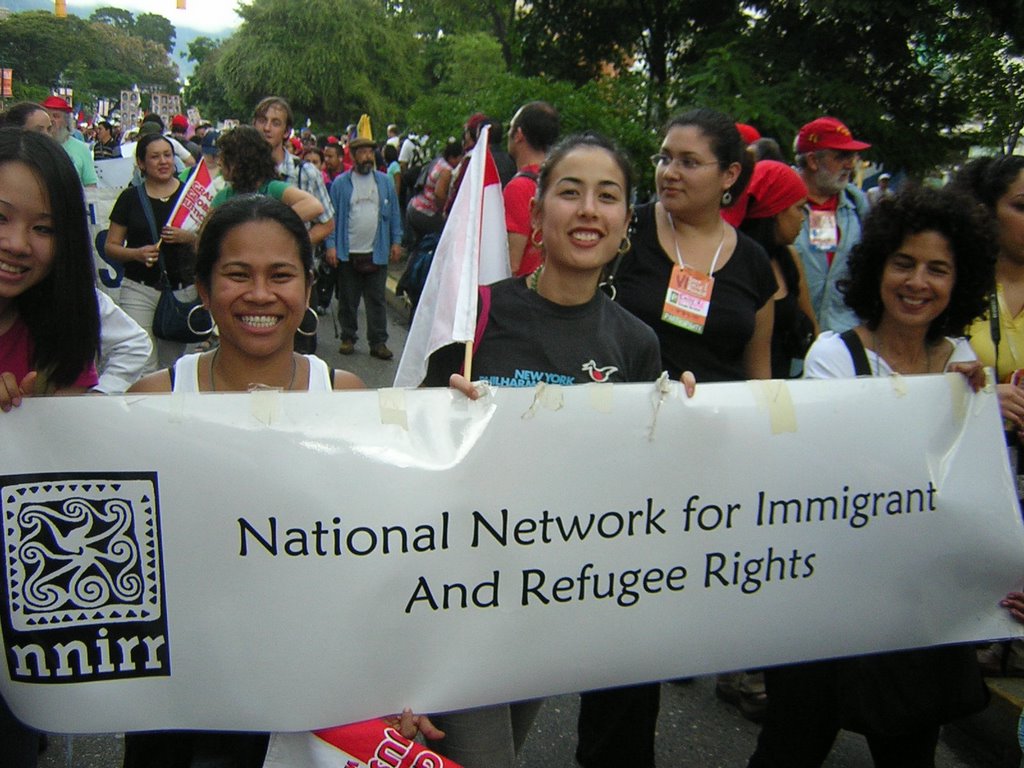
But we confidently forged ahead, especially in the opening march. NNIRR board member Susan Alva, alongside NNIRR members from CAAAV, CHIRLA and the Florida Farmworkers Association, carried the NNIRR banner high as we joined in our larger delegation´s chant "...Justice for the Whole World!...Que Viva!"

So the 6th WSF week has begun, in spite of the challenges. And as we look forward to this week, we know we´ll face even more challenges, logistical and otherwise. In the wake of a Congressional bill that proposes to build a wall on the US-Mexico border and seeks to essentially separate the U.S. from all of Latin America, the concept of a united Americas seems remote and distant. But for people who build communities across these borders, we have something to say about it, and we will.